
News
Folding plastic baskets
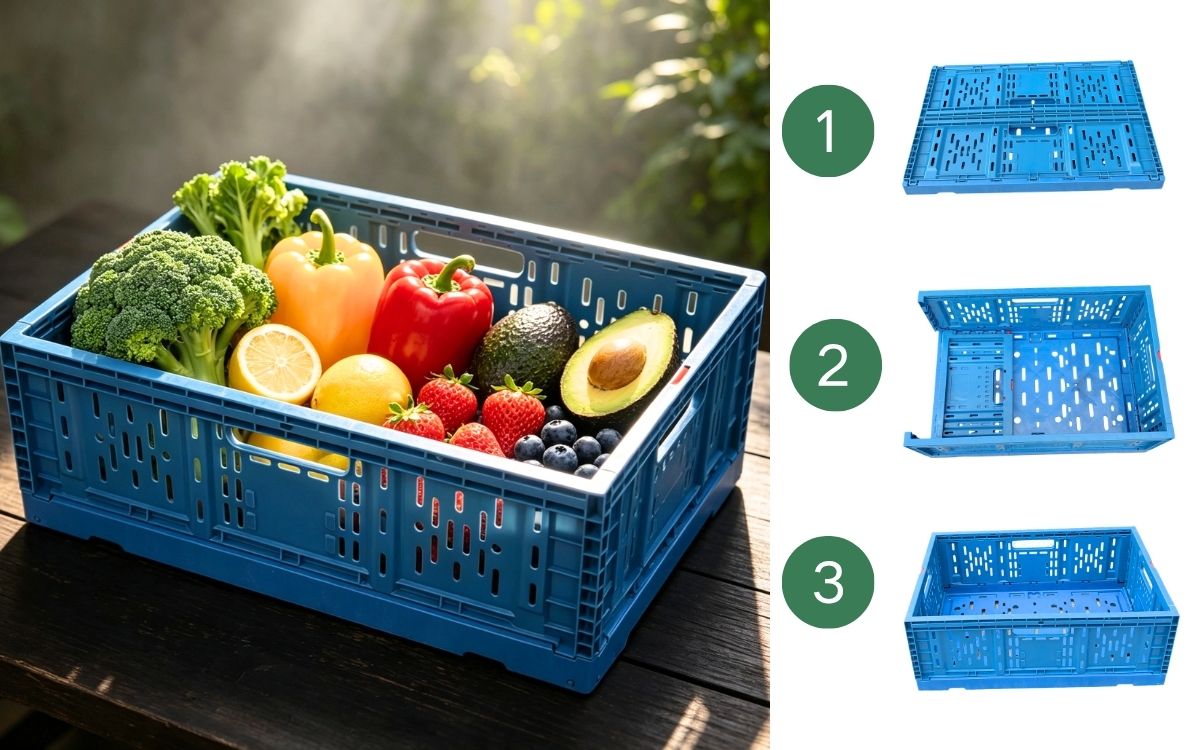
In today's fresh food supply chain, The foldable plastic basket is emerging as a little-known yet crucial core component.
The cost of returning empty containers has plummeted, while distribution efficiency has doubled.
Traditional fixed plastic turnover baskets incur significant space waste during return processes: a 9.6-meter truck can only carry 200 empty baskets, resulting in persistently high return costs. Foldable baskets, when not in use, reduce their volume to one-quarter of their original size, allowing a single truck of the same model to transport 800–1,000 empty baskets—cutting return costs by over 70%. This reduction enables annual freight savings of hundreds of thousands for stakeholders, ultimately benefiting farmers and consumers alike.
By eliminating the basket-reversal step, traditional fruit and vegetable distribution significantly reduces losses.
Under conventional methods, average loss rates range from 20% to 30%. The foldable basket enables "one-way transport throughout the entire journey," allowing produce to move directly from harvest point to retail shelves without rehandling, thereby minimizing physical impact and reducing losses by over 20%. Its integrated ventilation holes also enhance cold air circulation, extending the shelf life of certain leafy vegetables and berries by 5–6 days.
Substituting disposable packaging for sustainable transportation solutions
Traditional single-use packaging such as cardboard boxes and foam containers causes significant waste, high carbon emissions, and is prone to damage in humid environments. Food-grade PP folding baskets can be reused 300–500 times, with packaging costs per trip substantially lower than those of disposable alternatives. In typical 1,000-kilometer transport scenarios, they reduce carbon emissions by nearly 50%, and can be recycled after disposal, aligning perfectly with plastic reduction and carbon mitigation goals.
Equipped with digital capabilities to empower smart agriculture
Today, folding crates can be equipped with traceability labels and smart chips to link data from every stage of the produce’s journey, enabling full traceability. This not only provides consumers with clear information about the product’s origin but also helps fresh produce companies precisely manage the flow of goods and optimize their supply chains, making these crates the smallest core unit in the digital distribution of fruits and vegetables.